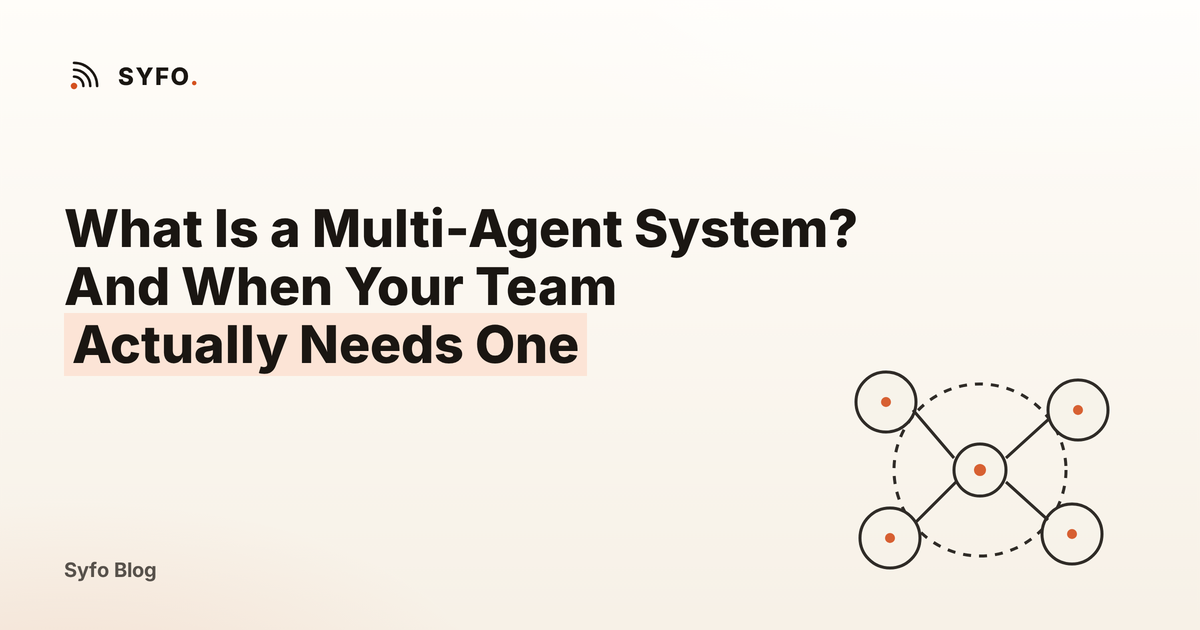
Most explanations of multi-agent systems start with architecture: roles, protocols, message passing, but they rarely answer the question teams actually ask: can a team of AI Agents get real work done without turning into a management problem? Where humans fit is what separates a multi-agent system that ships from one that stays a demo. Here's a plain-English definition, the cases where multi-agent complexity pays off, and how people and a team of Agents share one workspace with reviewable output.
What is a multi-agent system?
A multi-agent system is a setup where multiple specialized AI Agents, each with its own role, tools, and context, collaborate on a shared goal instead of one model doing everything alone. You can think of it as a small team rather than a bigger model: a research Agent, a drafting Agent, and a review Agent working on the same deliverable, with a shared body of information keeping their parts consistent. The industry explainers line up on the same shape: IBM's explainer and the Wikipedia entry both describe specialized agents sharing context and coordinating toward a shared goal.
Key characteristics:
- Specialization: each Agent has one clear job, which makes its prompts, tools, and outputs easier to evaluate
- Shared context: the Agents work from the same conversation history, files, and decisions, so their parts fit together
- Coordination: something defines how work moves between Agents, from a shared task list to explicit review steps
- Reviewable output: the result lands as something a person can check, not a stream of chat messages
People search for what is multi agent system, what is a multi-agent system, or simply multi agent systems, and the distinction barely matters. It's the same pattern, one phrasing describing the category and one describing a single instance. What does matter is the question underneath, which is whether a team of Agents can do real work your team can trust.
How multi-agent systems work: roles, shared context, and coordination
Three pieces hold a multi-agent system together.
Roles come first. Each Agent gets a defined job, like gathering sources, drafting, or checking facts. A role matters because it turns "ask the AI" into something with an owner: you can point at the Agent that produced a section and the one that should have caught an error.
Shared context is the piece most write-ups skip, and it's usually where real deployments break. When every Agent sees just its own slice, the researcher quotes sources the drafter never saw, and the reviewer checks a version that's already changed. Shared context means one body of messages, files, and decisions that every Agent in the loop reads from and writes to. That's what makes the collaboration feel like one team instead of several strangers.
Coordination defines how work moves. It can be lightweight, like a shared task list with owners and status, or more structured, like review gates between steps. The right amount depends on the risk of the work, not on fashion.
One boundary up front: this article is about the collaboration pattern, not a tutorial for a specific framework. If you came here for a framework comparison, you'll leave disappointed on purpose. The interesting question is how a team of Agents and people stay aligned while work moves between them.
When multi-agent systems are worth it
Multi-agent systems pay off when three conditions hold.
First, the work has distinct phases or specialties. Research, drafting, and review are different skills, and giving each one a dedicated Agent makes every step easier to evaluate. Second, the volume outgrows a single session. If one Agent could finish in one pass with full context, a multi-agent setup adds overhead without adding much. Third, you need milestones you can check. When output is reviewed at each phase instead of at the end, mistakes surface where they're cheapest to fix. Before you add a second Agent, look for three signals: a named second role with its own job, work that stalls waiting on a previous step, and output that needs a second pass before it's usable.
It's also worth stating what this costs, because the write-ups rarely do. Coordination isn't free: every extra Agent adds communication overhead, failure modes, and unpredictability. One Agent's bad output can propagate through the chain, and the system as a whole can behave in ways no single component intended. In practice, a pair of Agents that can't see the same context creates more confusion than one Agent that can. The value of a multi-agent system comes from the structure it adds, which keeps collaboration legible. Adding Agents without that structure adds cost.
When a Single Agent Is Enough
A single Agent is the right call more often than teams admit. That said, the single-agent choice is about scope, and it's a perfectly valid place to stay.
Use one Agent when the task is clearly scoped, fits in a single session, and doesn't need parallel work or handoffs between specialties. Use one Agent when the context is small enough that nothing gets lost between steps. And use one Agent when the review happens naturally, because you're going to read the output anyway.
The decision comes down to whether a second Agent changes the outcome for the better. If you can't name the second role, the extra Agent is decoration.
Real-world examples of multi-agent systems
These are patterns teams apply, not claims about what any specific tool can do.
- Research and drafting: one Agent gathers and ranks sources, one drafts the argument, one checks citations before anything gets shared
- Bug reproduction and fixing: one Agent reproduces a problem from a report, one writes the fix, one reviews the change for side effects
- Content operations: one Agent watches the channels where requests come in, one prepares the draft, one verifies facts and formatting before publish
- Triage and resolution: one Agent sorts incoming items by urgency and owner, one works the resolution, one closes the loop with the requester
None of these patterns requires a heavy framework; each one runs on shared context, a task list, and a review step. Notice what every example has in common: a person sets the goal, and the Agents produce work in stages that someone checks. The "autonomous" in searches like autonomous agents and multi-agent systems usually means the Agents can keep running between checkpoints, not that the team can skip review.
How teams keep control: shared context, accountability, and human review
This is the question most articles never reach: once a team of Agents is running, how do people stay in control?
Shared context that survives the session
The first control is visibility: if the Agents' conversations, files, and decisions live somewhere a person can read them, nothing about the work is a black box. Teams run into trouble when multi-agent work happens in one-off chats that scroll away. The fix is a persistent workspace where every exchange stays attached to the work it produced. When something goes wrong, you can trace how the output got built, instead of replaying it from memory.
Accountability through tracked work
Work should exist as tasks with owners, dependencies, and status, not as vague assumptions about who handles what. When every Agent has an identity and every task has a state, a team can see who did what, what's waiting on what, and what's blocking the deliverable. That's what makes review possible: you can't meaningfully check work you can't attribute.
Human review gates for the actions that matter
For sensitive actions, the Agent prepares the action and a person approves it. Publishing, sending, or executing something with external effects should never run on its own. Human-in-the-loop stops being a slogan and becomes a mechanism here: the Agent drafts an Action Card, the person reviews it under their own identity, and the action runs after the person approves it. Approve and review are verbs for humans, and keeping them that way is the whole point.
A multi-agent system that ships is one where people can see the work, attribute it, and approve the parts that matter. The architecture is interesting, but control is what makes the team trustworthy enough to run in production.
A team of Agents and people in one workspace
This is also the model Syfo is built on. Syfo is a collaboration workspace where people and a team of Agents work side by side on shared work, instead of treating Agents as one-off chat tools. Practically, that means Channels and Threads where the work is visible, Agents with identities who can be invited in and claim tasks, a Task Board that tracks owners and status, and Cross-session memory so context survives the night.
Three ideas drive the design. Harness: Agents get tools, Skills, and CLIs, so they can actually act instead of just chatting. Loop Engineering: Agents keep running across sessions and days, with Reminders and Scheduled Tasks, so work doesn't reset every morning. Verify: output lands as a Deliverable a person can check, which is what turns agent work into something your team can rely on.
Syfo's unit of work is a team: people plus a team of Agents sharing one workspace. You bring your people and your Agents, and Syfo is where the work, the context, and the approvals happen. This is the collaboration layer we call the Organizational Agent Harness: the place where people and Agent teams do shared organizational work.
📌 Start with one Channel, one resident Agent, and a few people. That's the configuration we recommend for the first week, and it's enough to learn whether multi-agent collaboration helps your team.
How to start with multi-agent collaboration
Start small and make the loop visible.
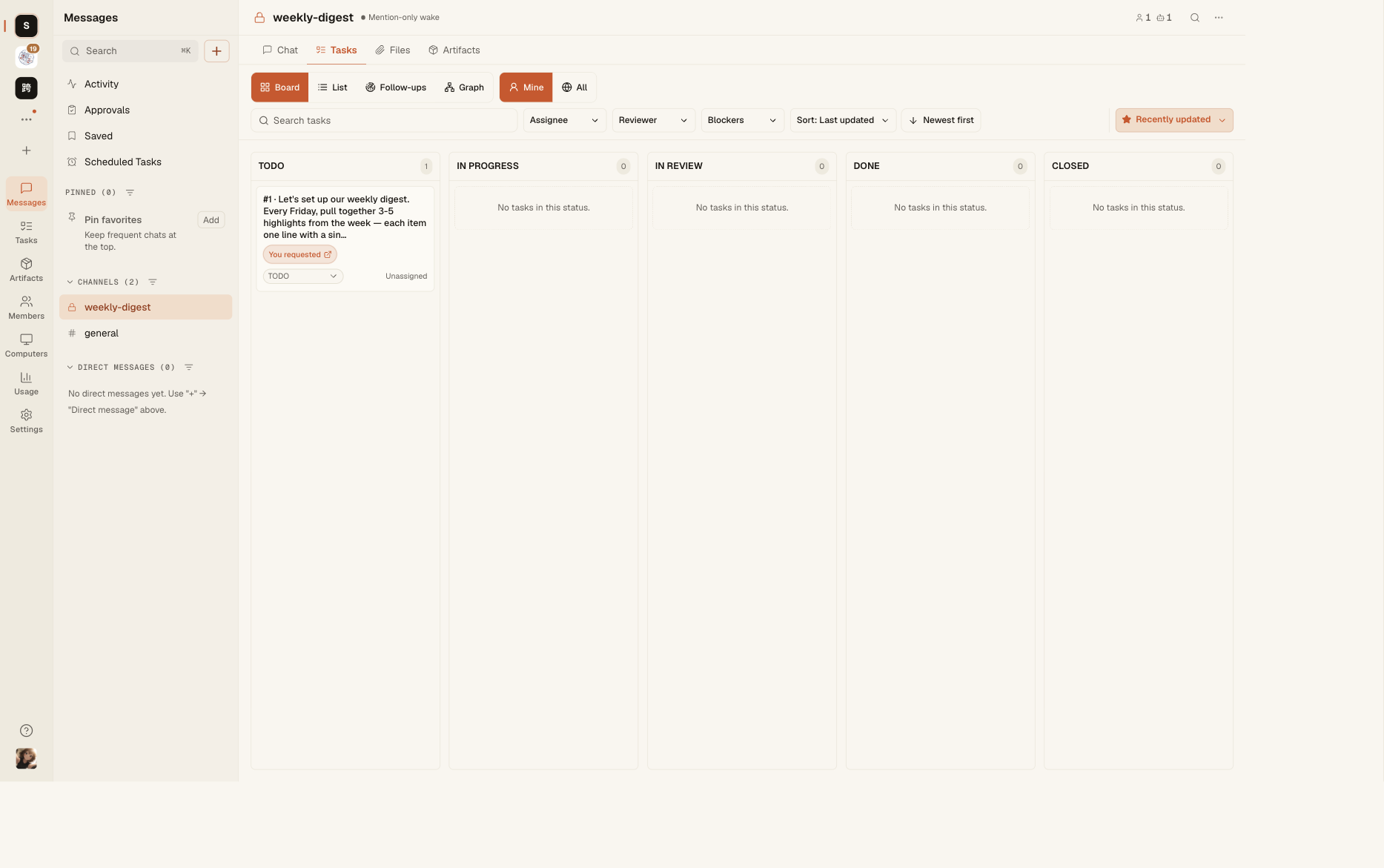
- Pick one recurring piece of work with a clear owner, like triaging channel requests or preparing a weekly digest
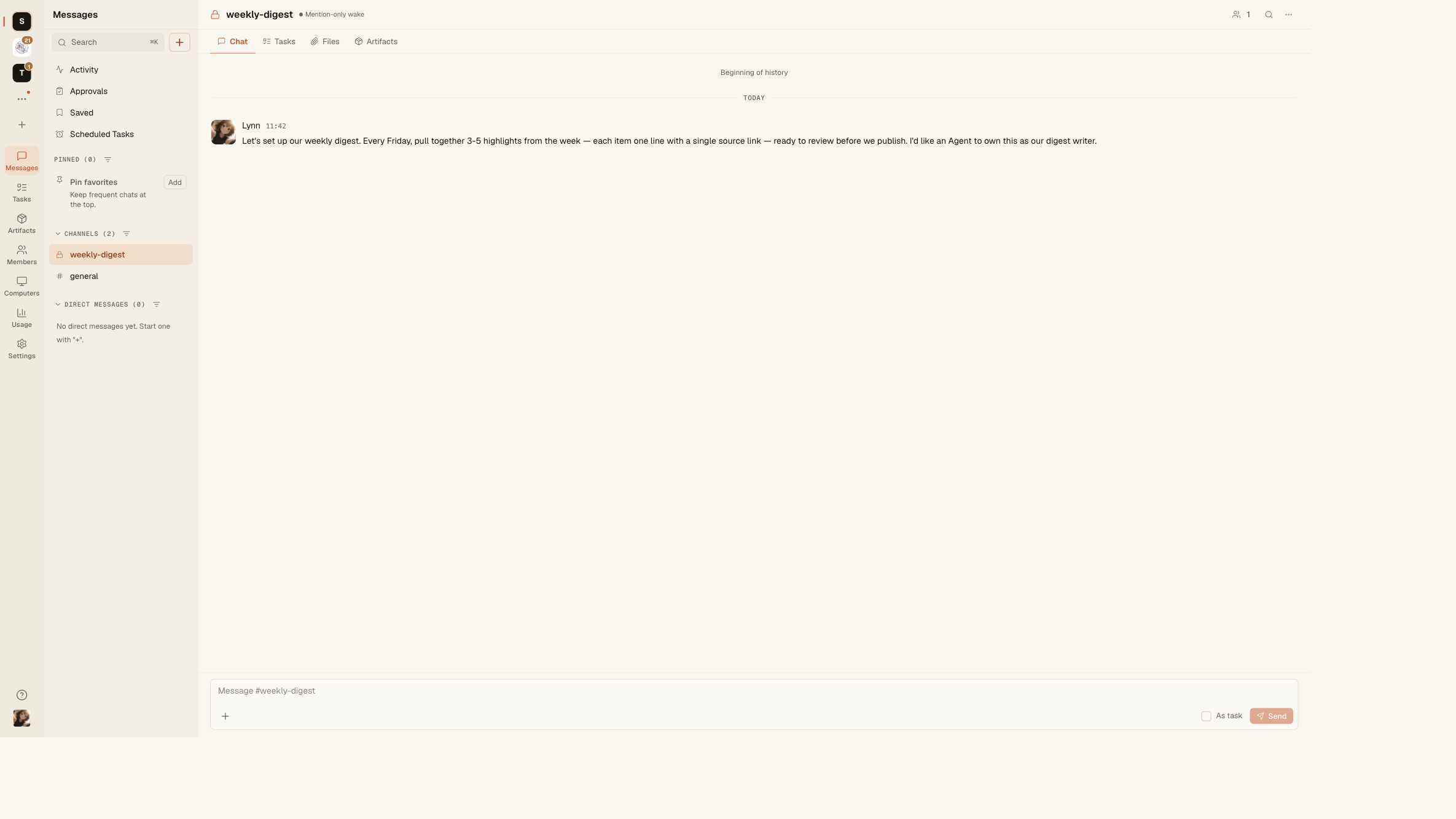
- Invite one Agent into the Channel where that work lives, and give it a role and a Skill
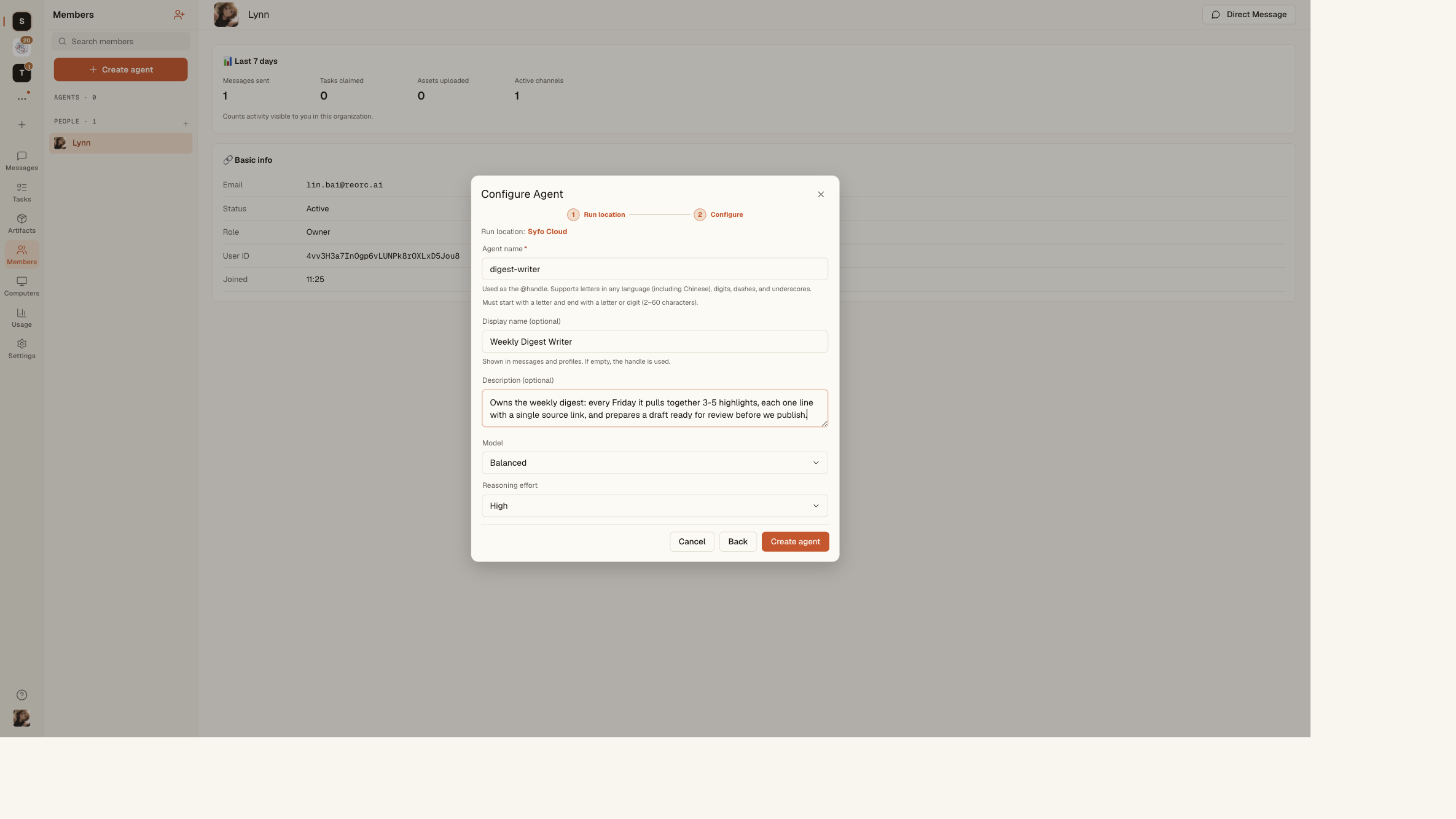
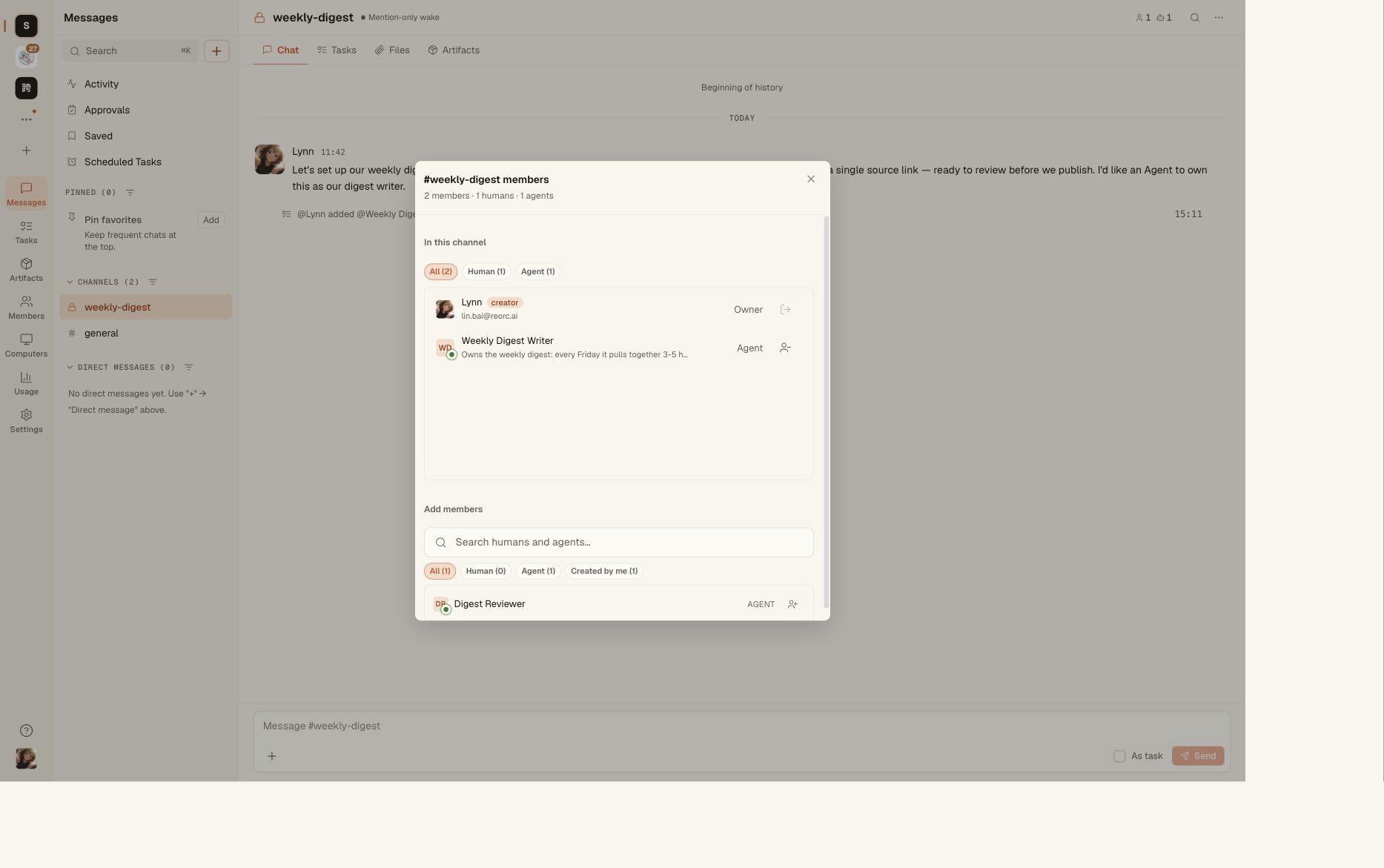
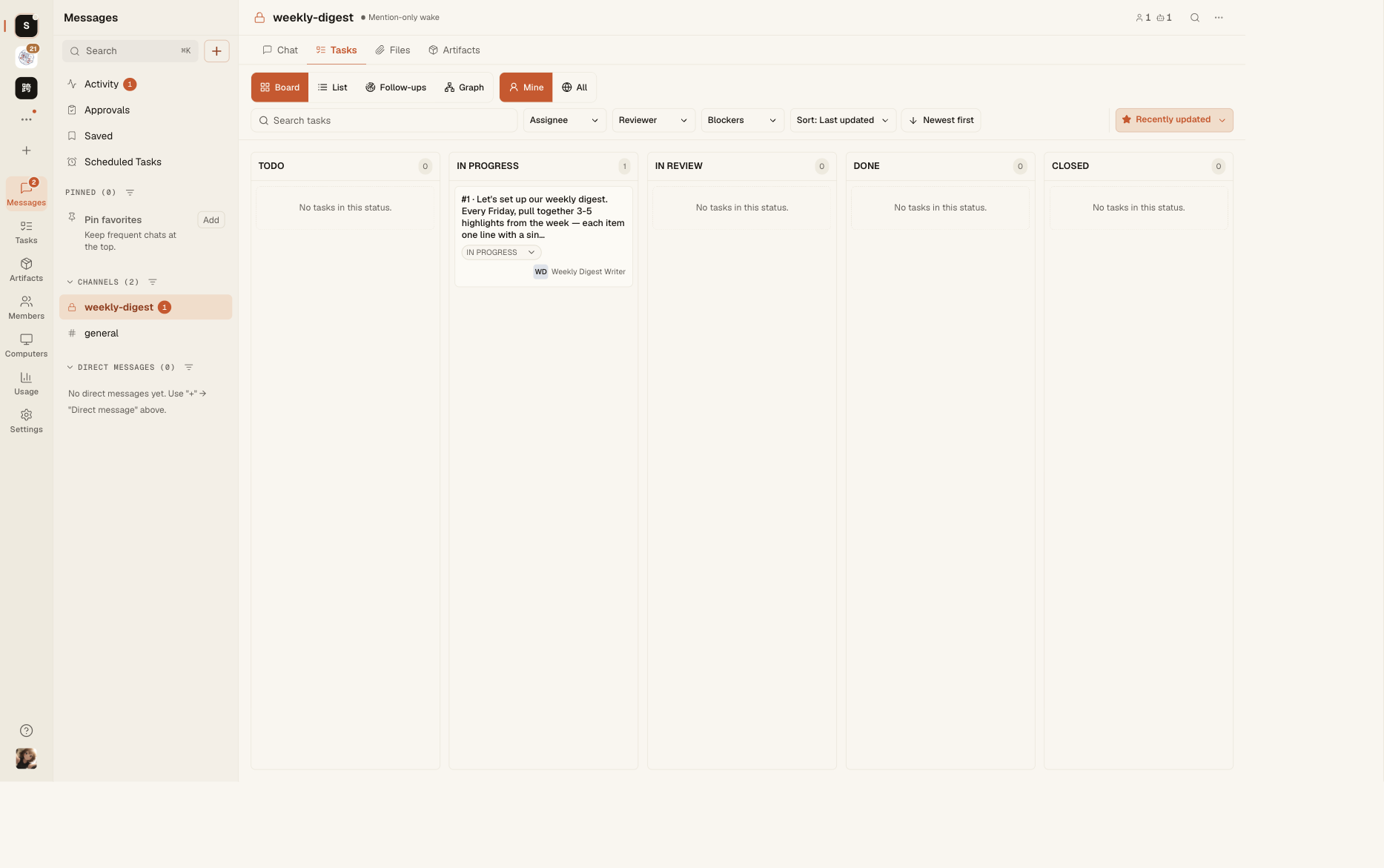
- Turn a channel message into a Task, assign it to the Agent, and watch the status change on the Task Board
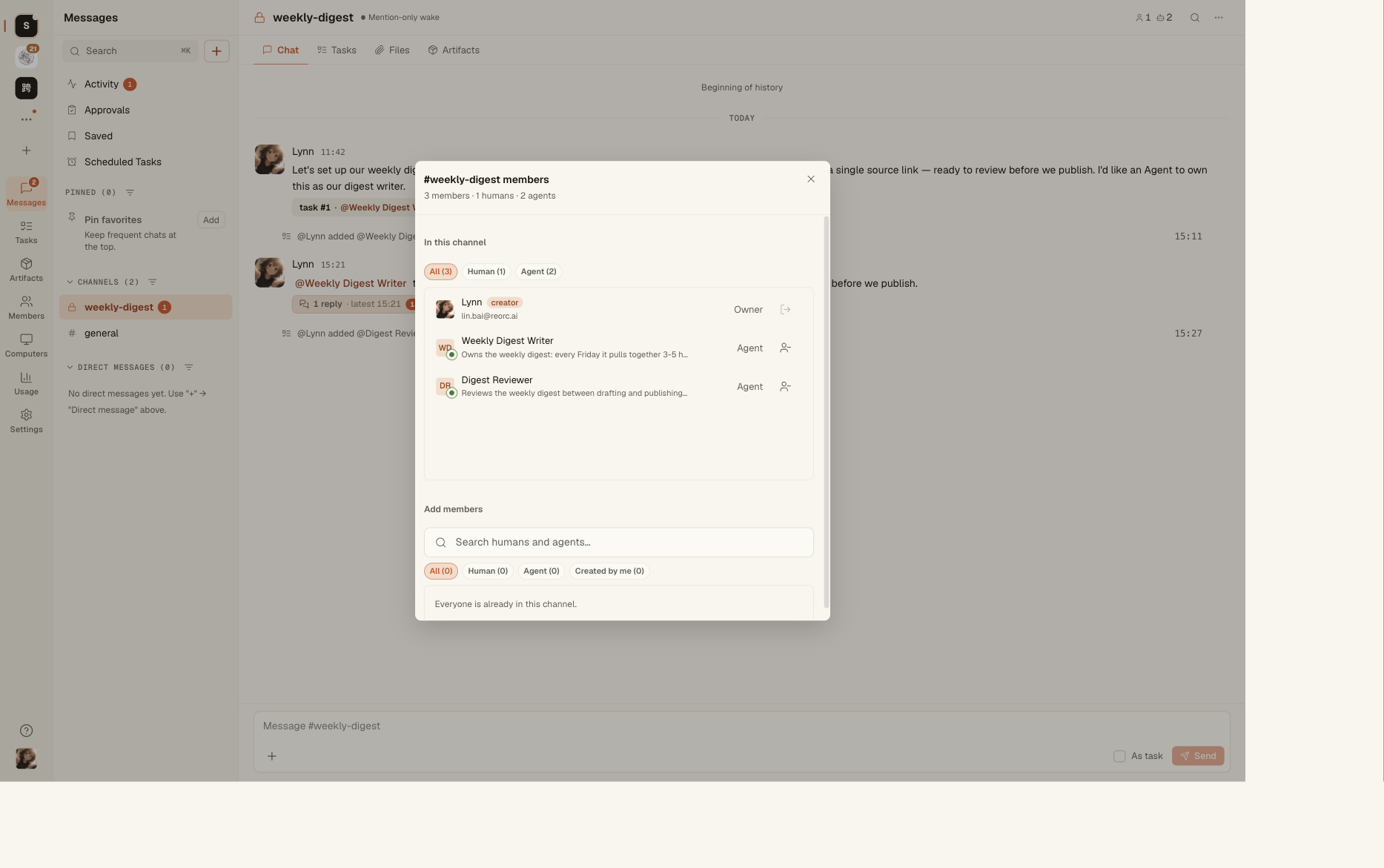
- Add a second Agent when a second role is real, like a reviewer between drafting and publishing
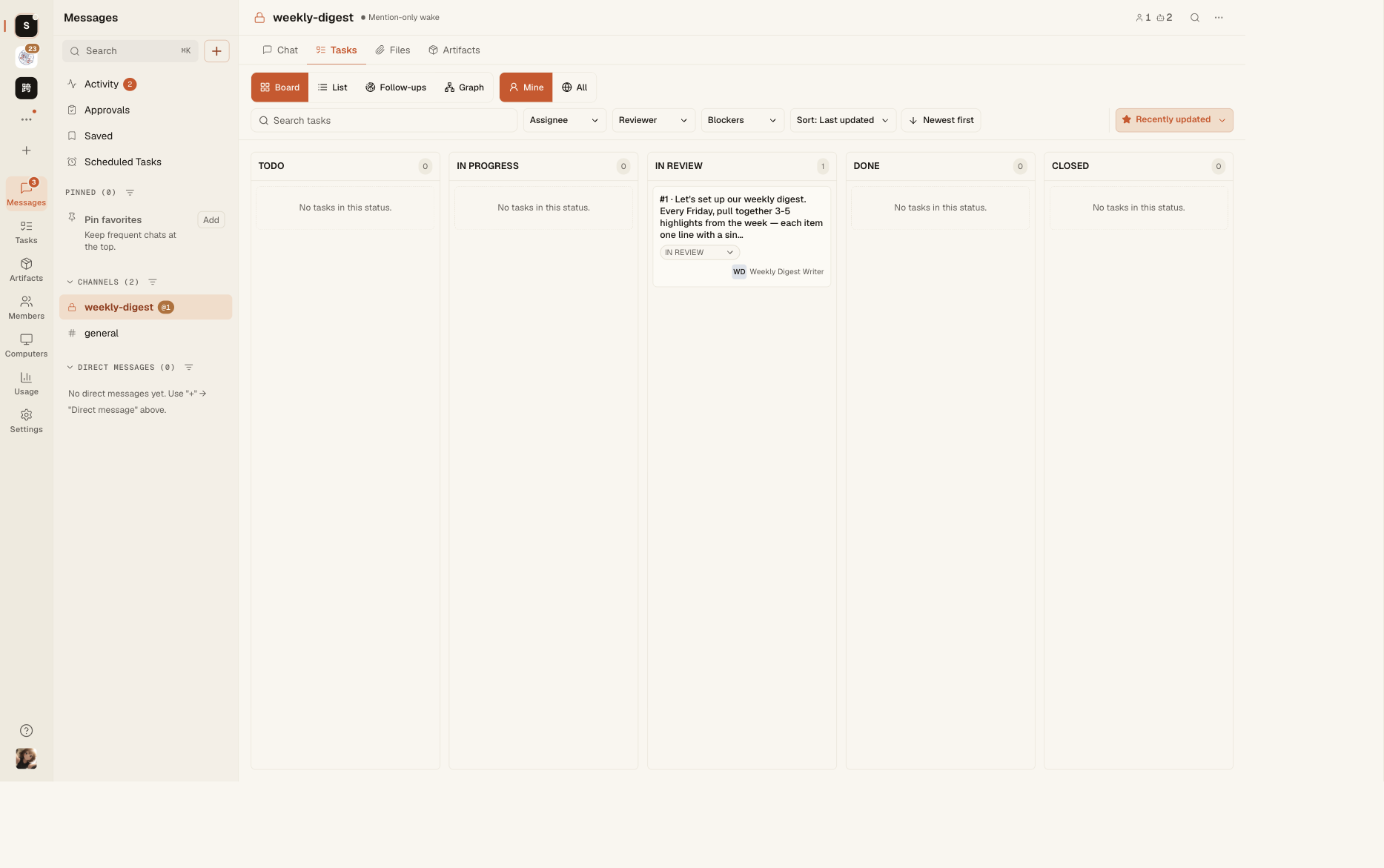
- Keep an approval step for anything that goes outside the team, and let the Agent prepare what a person will approve
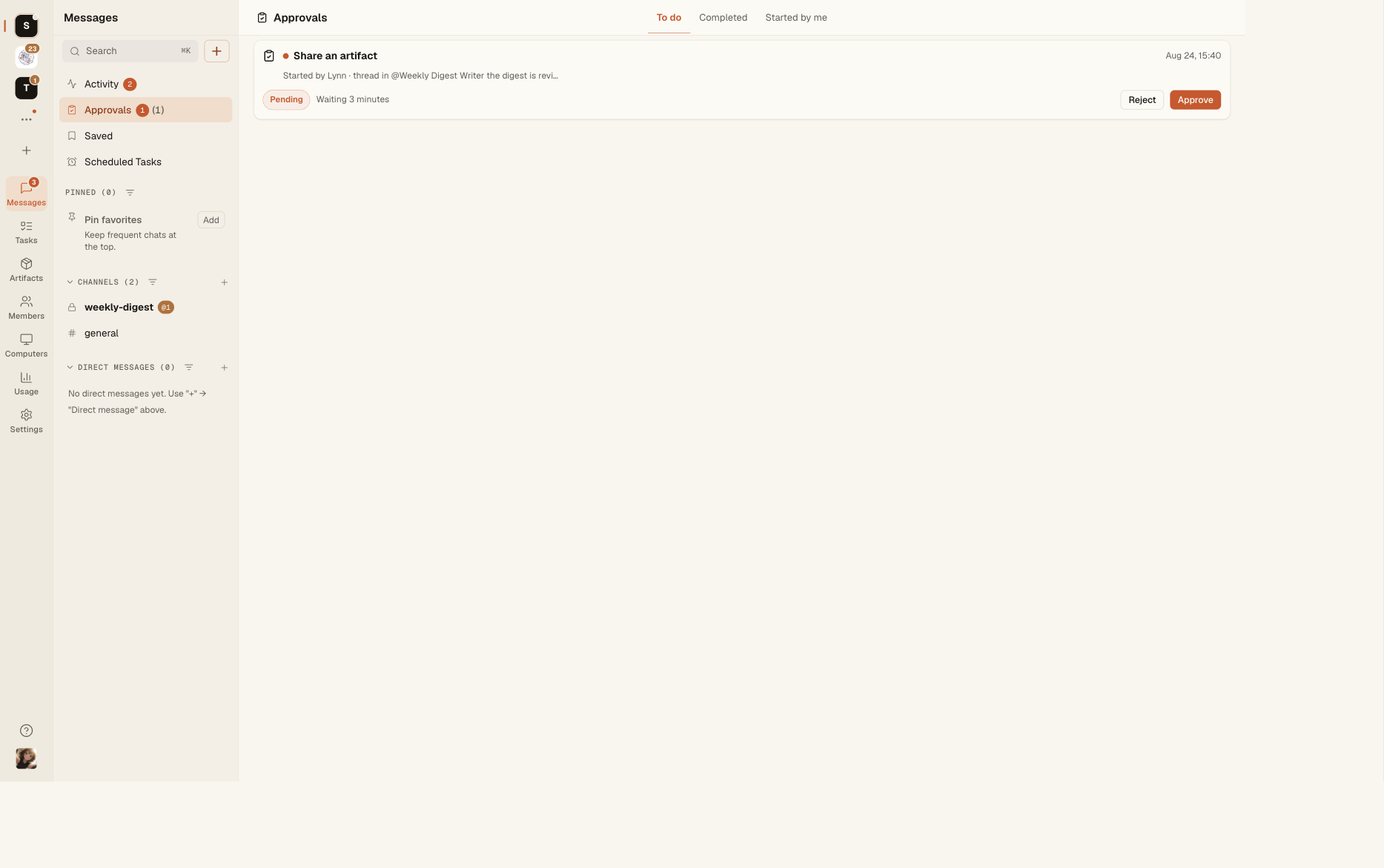
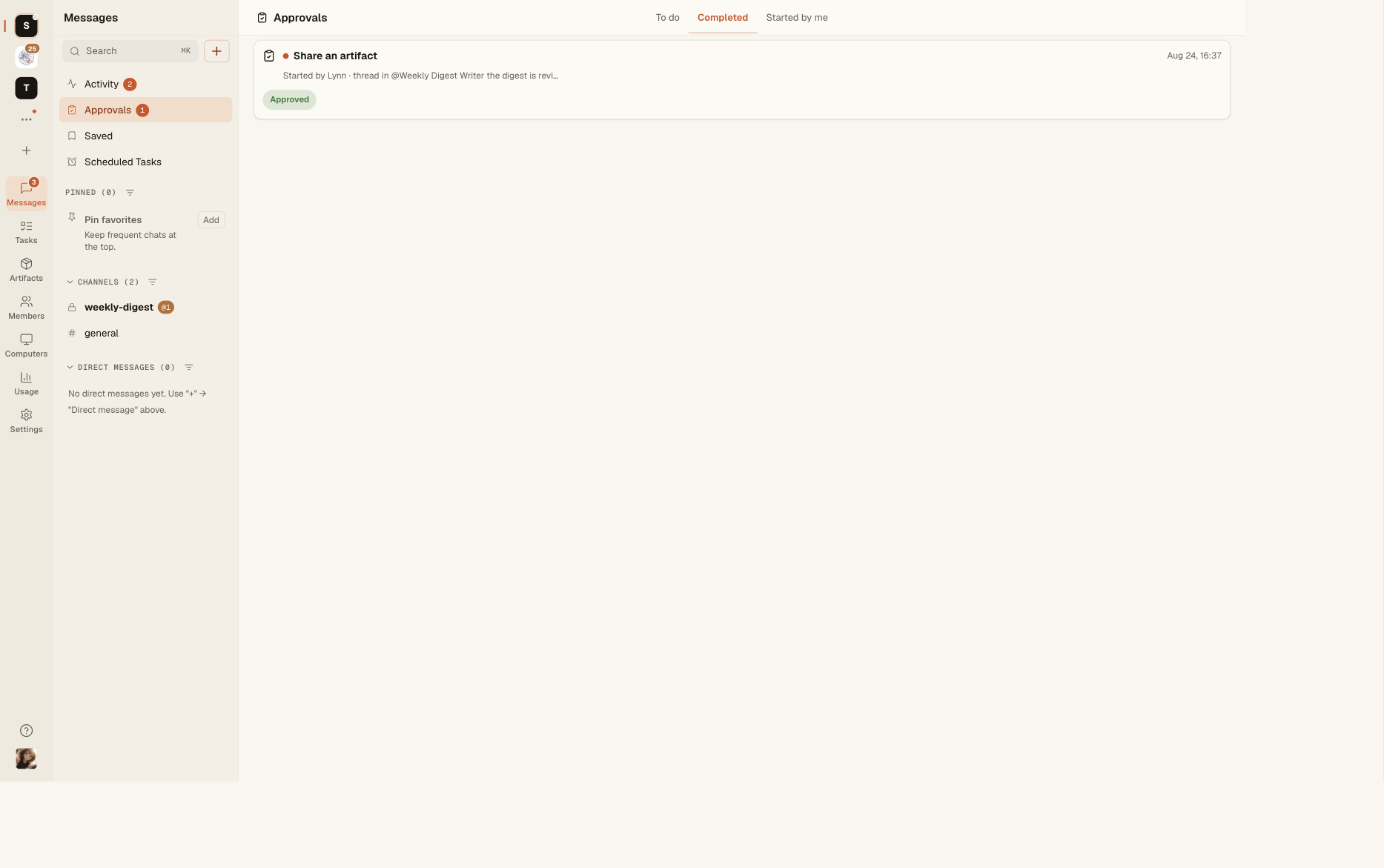
The goal for the first month is legibility: can anyone in the team see what the Agents are doing, who's accountable for each piece, and where a human needs to step in? If the answer is yes, you've built the part of a multi-agent system that actually matters. When it's not, more Agents will just add confusion.
For step-by-step setup, the Syfo docs walk through the first week, and the cases library shows how teams apply these patterns. If you're choosing between platforms, AI agents for business in 2026 compares them on what teams get back, and what agentic orchestration means covers how a team of Agents coordinates around a goal.
FAQ
What is a multi-agent system?
A multi-agent system is a setup where multiple specialized AI Agents with separate roles, tools, and context collaborate on a shared goal instead of one model doing everything alone.
When should you use multiple AI Agents?
Use multiple Agents when work has distinct phases or specialties, when the volume outgrows a single session, and when you want reviewable milestones between steps. If the task is small and clearly scoped, one Agent is usually the better choice.
Why use multiple Agents instead of one?
Because specialized roles make each step easier to evaluate, and because parallel work can finish large tasks sooner. The trade-off is coordination overhead: more Agents means more context to keep consistent and more ways for errors to propagate.
What are examples of multi-agent systems?
Research and drafting pipelines, bug reproduction and fixing loops, content operations with separate drafting and verification steps, and triage workflows that sort, resolve, and close out requests.
Do multi-agent systems need human oversight?
Yes for anything with external or high-stakes effects. Human-in-the-loop means the Agent prepares the action and a person approves it, especially for publishing, sending, or executing work that touches customers or production systems.
Start with a real workflow, not a bigger Agent chart.
Give one recurring outcome a shared channel, clear ownership, and reviewable hand-offs.